
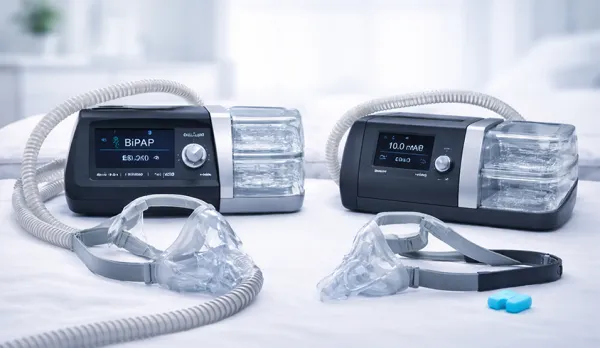
BiPAP vs CPAP: Understanding the Key Differences:
Sleep-related breathing disorders and chronic respiratory conditions can significantly affect quality of life if left untreated. CPAP and BiPAP machines are two of the most commonly prescribed non-invasive ventilation therapies—but they are not the same.
If you’re wondering which is better: BiPAP or CPAP, this guide breaks down the key
differences to help patients and caregivers make an informed decision.
What Is a CPAP Machine?
A CPAP (Continuous Positive Airway Pressure) machine delivers a constant, steady airflow to keep the airway open during sleep. It is most commonly prescribed for obstructive sleep apnea (OSA).
Common Uses of CPAP
- Mild to moderate sleep apnea
- Snoring caused by airway obstruction
- First-line treatment for sleep apnea
Benefits of CPAP
- Simple and easy to use
- Generally more affordable
- Widely recommended for new sleep apnea patients
What Is a BiPAP Machine?
A BiPAP (Bi-level Positive Airway Pressure) machine provides two different pressure levels:
- Higher pressure while inhaling (IPAP)
- Lower pressure while exhaling (EPAP)
BiPAP is typically prescribed for patients who struggle with CPAP therapy or have more complex breathing conditions.
Common Uses of BiPAP
- Severe sleep apnea
- COPD and chronic respiratory failure
- Neuromuscular disorders
- Patients intolerant to CPAP
Benefits of BiPAP
- Easier breathing during exhalation
- Better comfort for high-pressure needs
- Suitable for complex respiratory conditions
BiPAP vs CPAP: Key Differences at a Glance
Feature
Pressure Levels
Ease of Use
Comfort
Typical Use
Cost
CPAP
Single continuous pressure
Simple
Moderate
Mild–moderate sleep apnea
Lower
BiPAP
Two pressure levels
Advanced
Higher for complex cases
Severe apnea, COPD
Higher
Which Machine Is Right for You?
Choosing between BiPAP vs CPAP depends on medical diagnosis, comfort level, and breathing requirements.
- CPAP is usually recommended for patients with uncomplicated sleep apnea and stable breathing patterns.
- BiPAP is better suited for patients who need variable pressure support or have difficulty exhaling against continuous pressure.
Always follow a doctor’s prescription and sleep study results before selecting a machine.
Rent or Buy: What’s the Smarter Option?
For many patients, renting a CPAP or BiPAP machine is the ideal starting point—especially for:
- Short-term therapy
- Trial use after diagnosis
- Post-hospital discharge care
- Home recovery support
Rental options offer flexibility, lower upfront costs, and professional maintenance.
- Doctor-recommended devices
- Flexible rental plans
- Hygienic, well-maintained equipment
- Easy upgrades based on patient needs
Not sure whether you need a BiPAP or CPAP machine for home use?
Rent CPAP or BiPAP Machines from RentMedi
Get expert-supported, affordable respiratory care solutions delivered to your doorstep.
Sleep better. Breathe easier. Rent smart with RentMedi.
https://shorturl.fm/jGqZE